
Newborn Passport Photo

No Studio Needed · Works With Fussy Babies

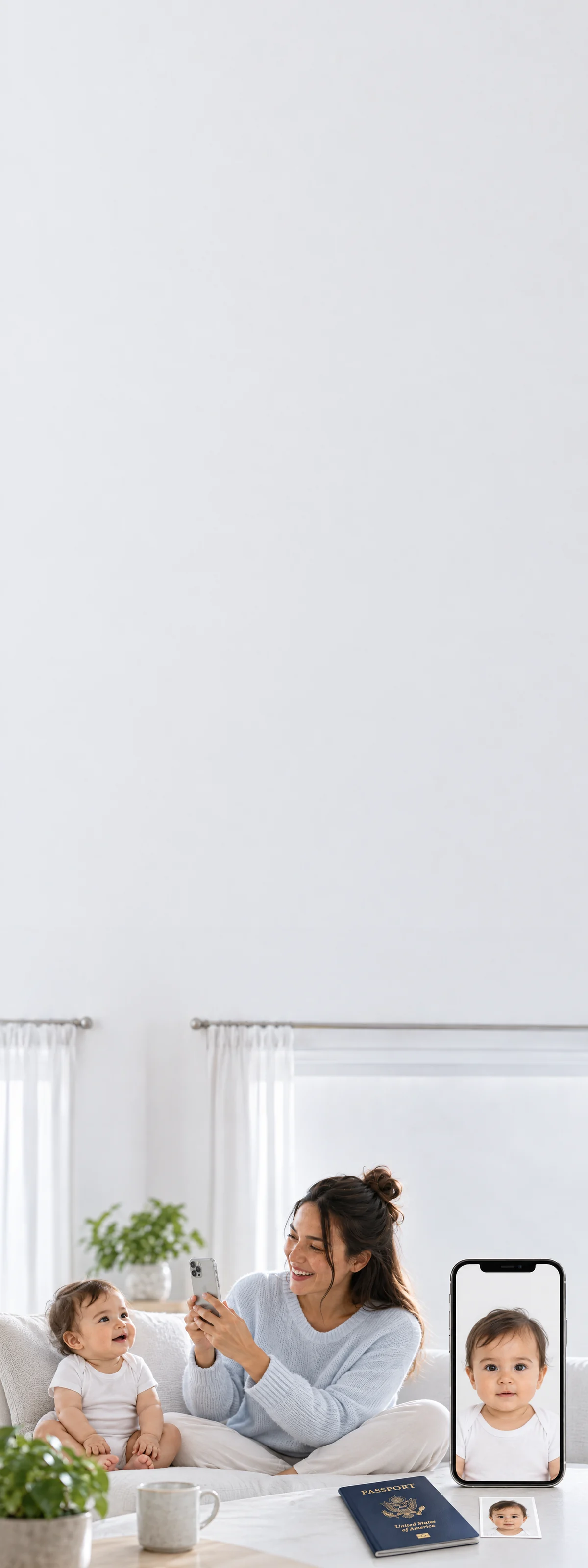
Taking a passport photo of a newborn or baby is hard — but not with Snap2Pass. Lay your baby on a white sheet, snap a photo, and our AI handles the rest. Compliant 2×2 photo, even if your baby won't sit still.

Original user photo before digital processingBefore
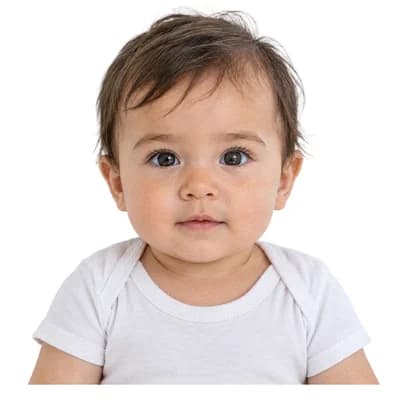
Digital US Baby Passport photo resized to official size requirements, ready for online applicationAfter
us flag

Why Choose Snap2Pass

500,000+ Photos Processed
99.8% Acceptance Rate
24/7 Customer Support

Lightning Fast

Advanced AI technology processes your photo in seconds, delivering professional results instantly.

AI Expert Review

AI-powered computer-vision algorithms verify size, lighting, background, and framing against photo standards.

Guaranteed Approval

If authorities reject your photo, we'll fix it for free or refund you - no hassle, no risk.

US Baby Passport Photo CheckBaby-Safe • Instant • Accurate

Specialized AI for infant photos. Validates age-appropriate requirements and official standards.

99%
Baby Photo Success
20+
Infant Criteria
5s
Quick Validation

Biometric Compliance

Baby face detection, eye visibility, neutral expression

Technical Quality

Resolution, lighting, focus, contrast

US Baby Passport Standards

Official requirements, compliance guidelines

Validated using age-appropriate biometric standards

AI US Baby Passport photo validation interface showing real-time analysis results
Real-time Analysis

Take Perfect PhotosAt Home

Professional Results • No Technical Skills Needed

Step 1: Body-camera distance - instruction for taking the perfect passport photo

Body-camera distance

Position yourself min 16-20 inch from the camera. Ensure your head, neck, and upper shoulders are visible in the frame.

Step 2: Posture: straight ahead - instruction for taking the perfect passport photo

Posture: straight ahead

Keep your head straight and centered. Look directly at the camera with a neutral expression, mouth closed, and eyes open.

Step 3: Lighting on both sides of the face - instruction for taking the perfect passport photo

Lighting on both sides of the face

Use natural lighting for even illumination. Avoid shadows and ensure all facial features are clearly visible.

Ready in under 5 minutes • Works with any smartphone

Print Your Newborn Passport PhotoSame Day

Walgreens, CVS & Walmart • Under $1 for 4 Photos

How to Print Your Photo

1

Download your digital photo

After checkout, download the print-ready file to your phone or computer

2

Visit CVS, Walgreens, or Walmart photo center

Use their app or in-store kiosk to upload your photo

3

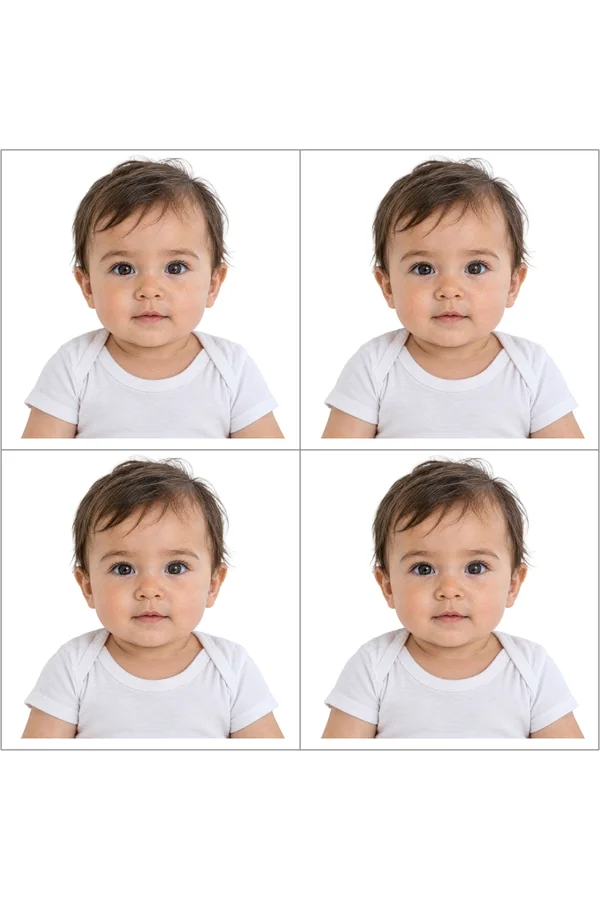
Print as 4x6 photo

Your file includes 4 passport-size photos on one 4x6 print

Print ready in 1 hour • No appointment needed

US Baby Passport SpecificationsMade Simple

Official Requirements • Compliant Standards

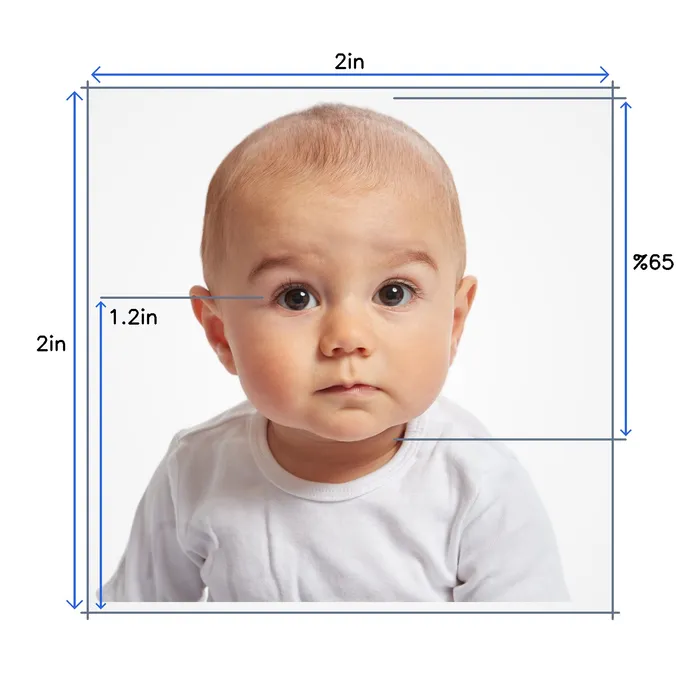
Size

2 x 2 inches

Resolution

600 dpi

Position

Head covers 65% of the photo

Background Color

#ffffff

Not Permitted

Hats and caps (except religious), Sunglasses, Heavy makeup

Official Site Link

Passport photo requirements to create photo online
Official Standards
Last update: 4/8/2026
Written bySandra - Author AvatarSandra
Expert verified

Newborn Passport Photo: How to Take One at Home

Getting a passport photo of a newborn is one of the trickiest parts of applying for your baby's first passport. Newborns squirm, close their eyes, and cannot sit up on their own. The good news: the US State Department is lenient with infant photos, and you do not need a professional studio. Here is how to get a compliant shot at home with just your phone.

Looking for the full baby passport photo requirements covering babies of all ages? See our US Baby Passport Photo Requirements guide for complete specs, the top 10 rejection reasons, and a step-by-step how-to.

Newborn Passport Photo Specifications

The US State Department requires the same basic specs for newborns as adults, with some flexibility built in for very young infants:

  • Size: Exactly 2 x 2 inches (51 x 51 mm)
  • Head height: 1 to 1⅜ inches (25 to 35 mm) from chin to crown
  • Background: Plain white or off-white, no patterns or shadows
  • Expression: Neutral, mouth closed (crying or laughing photos will be rejected)
  • Eyes: Open and visible — with leniency for very young infants under 6 months
  • No head coverings: No hats, headbands, bonnets, or bows — unless worn daily for religious reasons
  • No props or other people: No pacifiers, bottles, toys, hands, or siblings visible in the frame
  • Recent: Taken within the last 6 months
  • Digital upload: Minimum 600 x 600 pixels for online applications

The Newborn Leniency Rule

The US State Department explicitly acknowledges that newborns cannot always comply with adult photo rules. You can rely on these exceptions:

  • Eyes may be partially open or even closed for babies under roughly 6 months. Aim for open when possible, but do not discard an otherwise perfect shot just because one eye is half-closed.
  • The car seat method is explicitly allowed: place the baby in a rear-facing car seat with a plain white cloth draped over the back, so only the baby is visible in the frame.
  • You can photograph with the baby lying flat on a white sheet, looking up at the camera.
  • Natural skin flushness — which is normal for newborns — is accepted. Do not try to "correct" it.

The Biggest Challenge: Positioning

Newborns cannot hold their heads up, so forget about sitting them in a chair. The two methods that work:

White sheet method

  • Lay your baby on a plain white sheet or blanket spread flat on a bed, crib, or the floor
  • Stand directly above and photograph straight down so the face is centered and looking up at the camera
  • Make sure the sheet is smooth and wrinkle-free — wrinkles create shadows that can trigger a rejection
  • Snap2Pass automatically removes the background and replaces it with solid white, so minor sheet imperfections are handled — but fewer wrinkles means a cleaner base image

Car seat method

  • Place the baby in a rear-facing car seat
  • Drape a plain white cloth behind their head, fully covering the car seat back
  • Shoot from directly in front of the baby
  • This keeps the baby slightly reclined and often more alert than lying flat

Both methods are State Department approved. Pick whichever is easier with your baby.

Getting the Eyes Open

This is the number one frustration for parents of newborns. A few tips that actually work:

  • Shoot right after feeding when the baby is alert but calm. A hungry or tired newborn will not cooperate.
  • Have a second person stand behind you and make gentle sounds, dangle a small toy, or softly call the baby's name to get their attention toward the camera
  • Take many photos — 20 to 30 attempts is normal. Use burst mode. You only need one good frame.
  • Natural light is essential. Position near a window on a bright overcast day. Avoid flash, which startles newborns, creates harsh shadows, and causes red-eye.

What if the eyes are closed anyway?

For infants under 6 months, the State Department is more lenient. A photo with slightly squinting eyes may still be accepted. However, both eyes open and visible gives you the best chance of approval on the first try.

Newborn-Specific Rejection Reasons

Beyond the general issues that affect all baby passport photos (hair, pixel sizing, mouth open, shadows — see the full rejection reasons guide for all 12), newborns have a few unique pitfalls:

  1. Wispy newborn hair drifting across the face. Fine hair that looks fine on attempt 1 can move on attempt 10. Re-check the preview before every shot.
  2. Mid-yawn mouth open. Newborns yawn often, especially when tired. Wait for a settled moment, not immediately after a burp or change.
  3. Eyes rolled back or only one eye open. The leniency rule helps here, but strict reviewers still flag asymmetric eyes. Re-shoot if you can.
  4. Crying caught mid-breath. Even between sobs, newborns look distressed. Wait for a fully calm window.
  5. Head resting on the parent's shoulder or hand. The car seat and white sheet methods solve this — no support should ever be visible in the frame.
  6. Wrinkled background sheet — newborns don't flatten the sheet like older babies do, so iron it or let Snap2Pass replace the background.

Why You Do Not Need a Studio

Pharmacy kiosks are not designed for newborns. The fixed camera height, harsh lighting, and time pressure make it nearly impossible to get a compliant shot of a baby who will not cooperate on command. Most store staff have 1-2 attempts before they print whatever they captured.

With Snap2Pass, you take the photo on your own schedule in a comfortable environment. The AI checks compliance against official State Department specs, removes the background, crops to exact 2x2 dimensions, and formats the image — all in under 60 seconds. If your newborn blinks, just try again. No extra charge, no time pressure. 14-day resubmission window included.

Frequently Asked Questions

Can a newborn have closed eyes in a passport photo?

Yes, with leniency. The US State Department allows slightly closed or squinting eyes for very young infants under 6 months. Both eyes fully open is still preferred and gives you the best chance of first-try approval. Do not throw out a photo just because one eye is half-closed.

How do I take a passport photo of a newborn who cannot sit up?

Use either the white sheet method (lay the baby face-up on a plain white sheet, stand above, and shoot straight down) or the car seat method (drape a white cloth over the back of a rear-facing car seat so only the baby is visible). Both are State Department approved.

Can I use flash on a newborn passport photo?

No. Never use flash on a newborn. Flash causes red-eye, harsh shadows, startles the baby, and makes it harder to get multiple good shots. Use natural light from a large window on a bright overcast day instead.

Can my newborn be sleeping in the passport photo?

The US State Department wants eyes open whenever possible, and a sleeping newborn photo may be rejected by strict reviewers. However, slightly closed or squinting eyes are accepted for young infants. Aim for alert and eyes open — shoot right after feeding when the baby is calm but not sleepy.

How soon after birth can I apply for my baby's passport?

You can apply as soon as you have the baby's birth certificate — typically 2 to 4 weeks after birth. There is no minimum age. Many parents apply in the first few weeks so the passport is ready before a planned trip. See our US Infant Passport Process Complete Guide for the full application walkthrough.

What if my newborn cries the entire time?

Try shooting at a different time. Right after a feeding and a diaper change is the calmest window. Hungry, tired, or wet babies will not cooperate. If all else fails, take the photo between cries — newborns pause between sobs, and burst mode will catch those moments.

How many photos should I take?

Most parents need 20 to 30 attempts to get one compliant shot — sometimes more. Use burst mode on your phone (press and hold the shutter button) to capture many frames quickly. Snap2Pass lets you upload different attempts for free until one passes compliance.

What if my newborn's photo gets rejected?

Most rejections are fixable with a retake. See our guide on how to fix a rejected infant passport photo for step-by-step resubmission tips and age-specific advice.

Ready to Take Your Newborn's Passport Photo?

Start at home with your phone. Use the white sheet or car seat method, shoot after feeding, and upload your best frame. Snap2Pass handles background replacement, exact 2x2 sizing, compliance verification, and the State Department leniency rules — in about 60 seconds. 99.8% acceptance rate. Unlimited retries. 14-day resubmission window included.

Helpful Resources

Common QuestionsAnswered

Everything You Need to Know

Supported DocumentsWorldwide

All Countries • Current 2025 Regulations • ICAO Compliant