Vietnamese E-Visa Photo
99.8% Acceptance Rate · Guaranteed
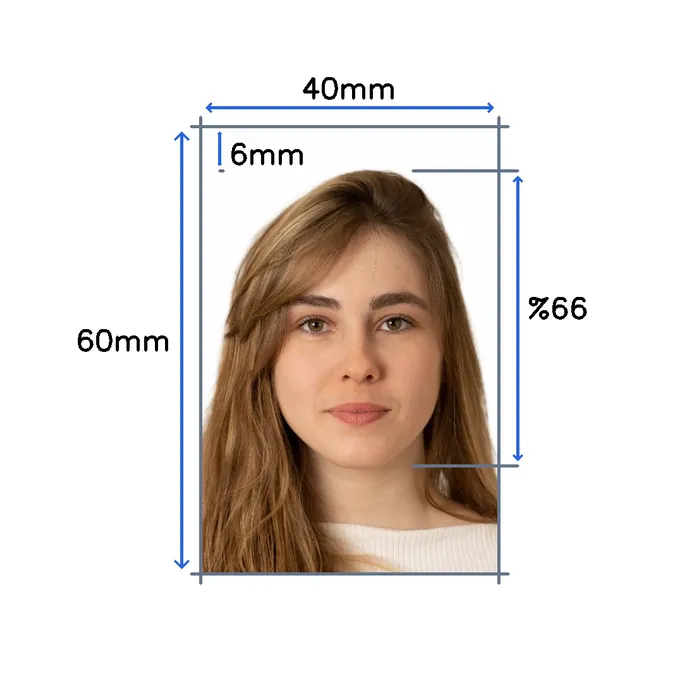
Take a selfie at home. We create a digital vietnamese e-visa photo with 40×60mm, white background, and correct head size per official standards.

Before
AfterWhy Choose Snap2Pass
Lightning Fast
Advanced AI technology processes your photo in seconds, delivering professional results instantly.
AI Expert Review
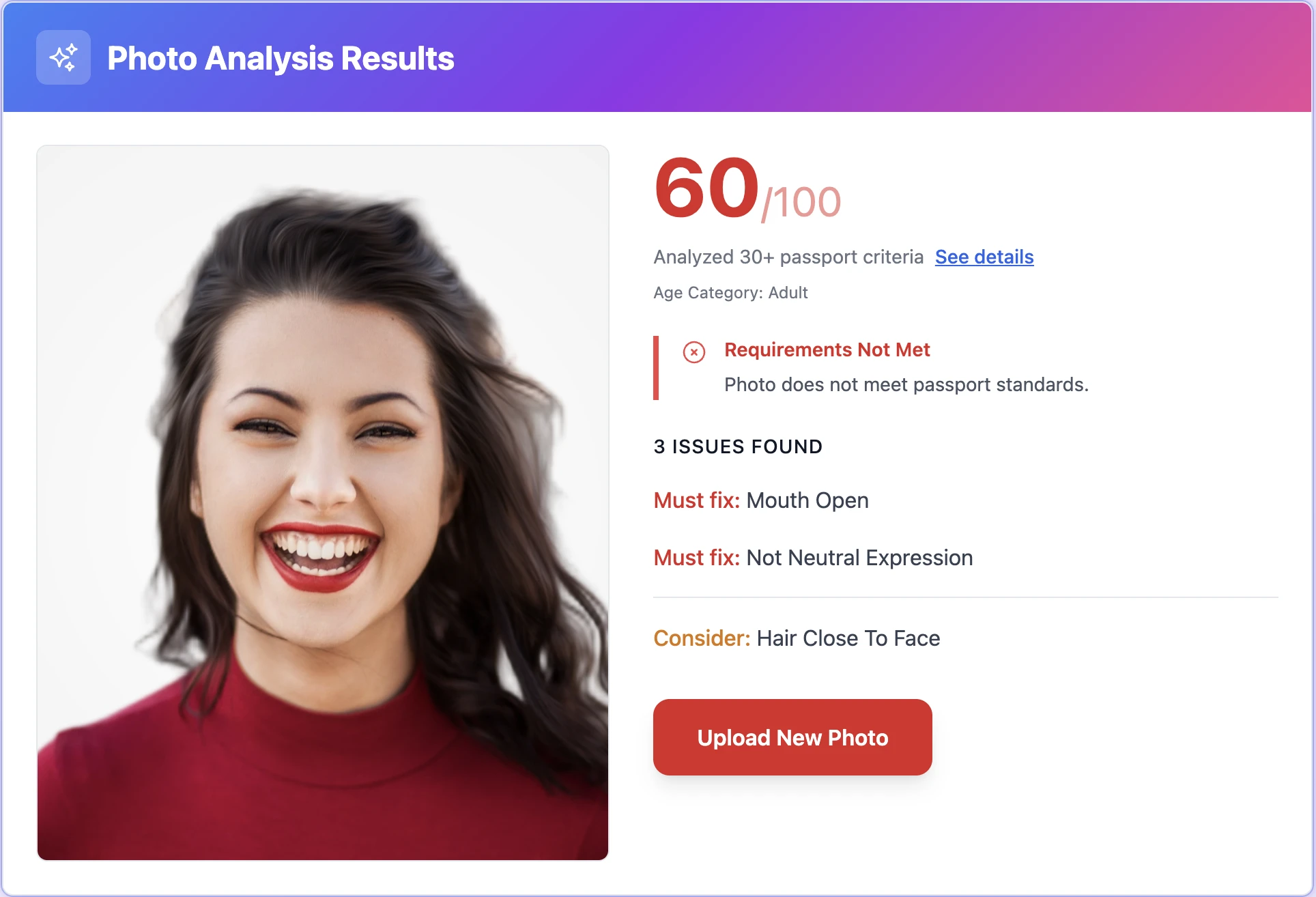
AI-powered computer-vision algorithms verify size, lighting, background, and framing against photo standards.
Guaranteed Approval
If authorities reject your photo, we'll fix it for free or refund you - no hassle, no risk.
Vietnamese E-Visa Photo CheckInstant • Professional • Guaranteed
Instantly verify your photo meets Vietnamese E-Visa requirements. Get it right the first time.
Biometric Compliance
Face detection, eye visibility, pose alignment
Technical Quality
Resolution, lighting, focus, contrast
Vietnamese E-Visa Standards
Official requirements, compliance guidelines
Validated using Vietnamese E-Visa official requirements
Take Perfect PhotosAt Home
Professional Results • No Technical Skills Needed

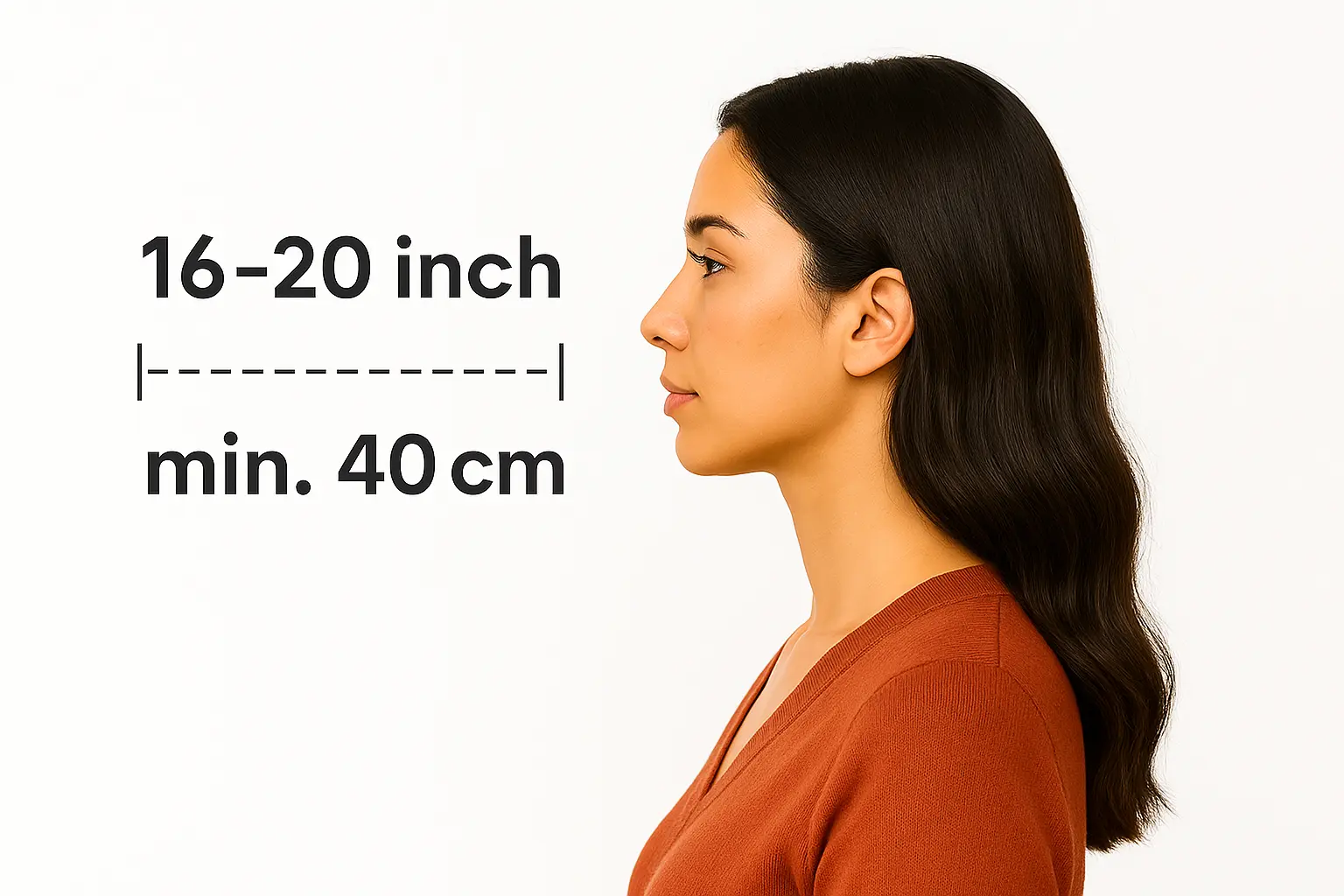
Body-camera distance
Position yourself min 16-20 inch from the camera. Ensure your head, neck, and upper shoulders are visible in the frame.
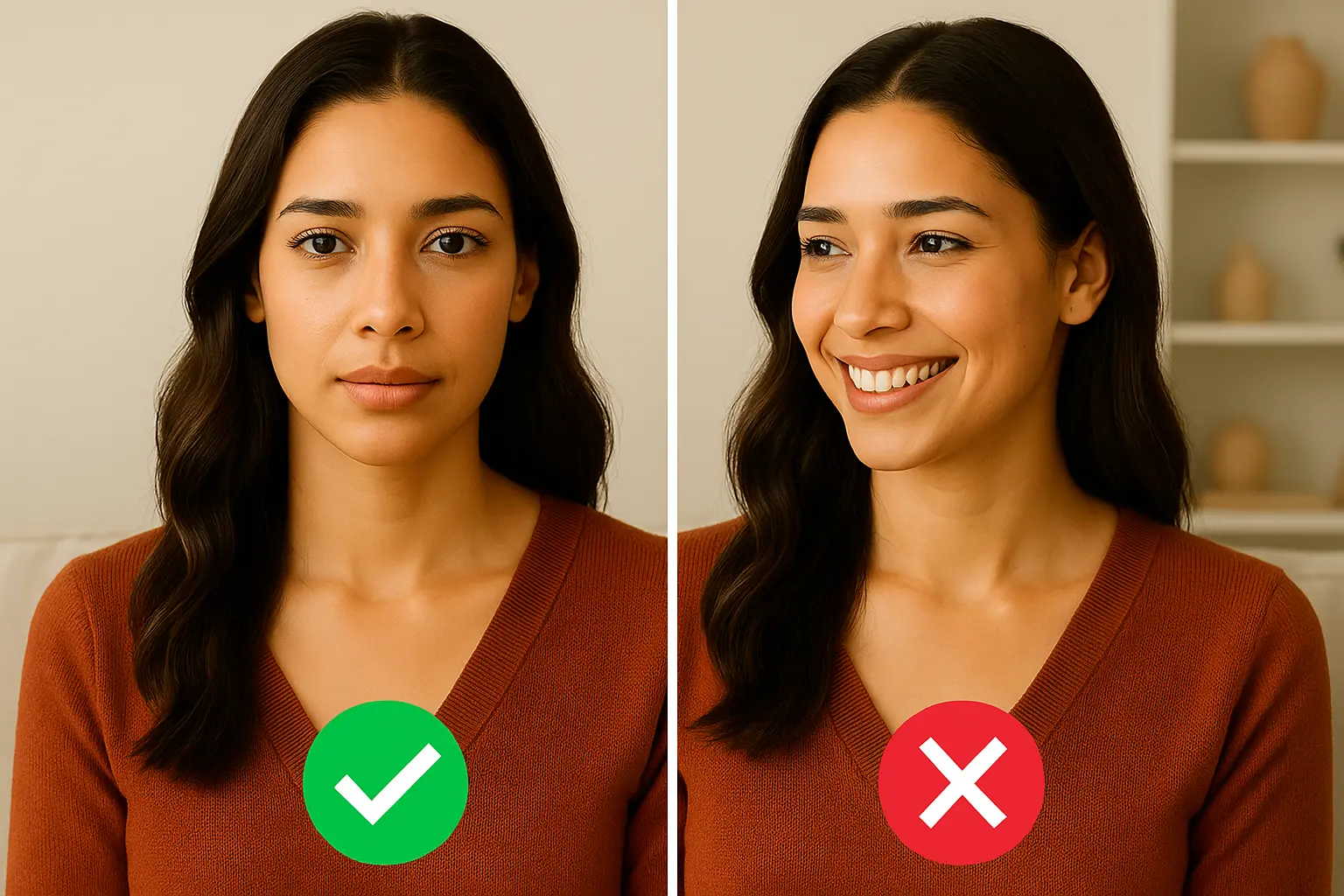
Posture: straight ahead
Keep your head straight and centered. Look directly at the camera with a neutral expression, mouth closed, and eyes open.
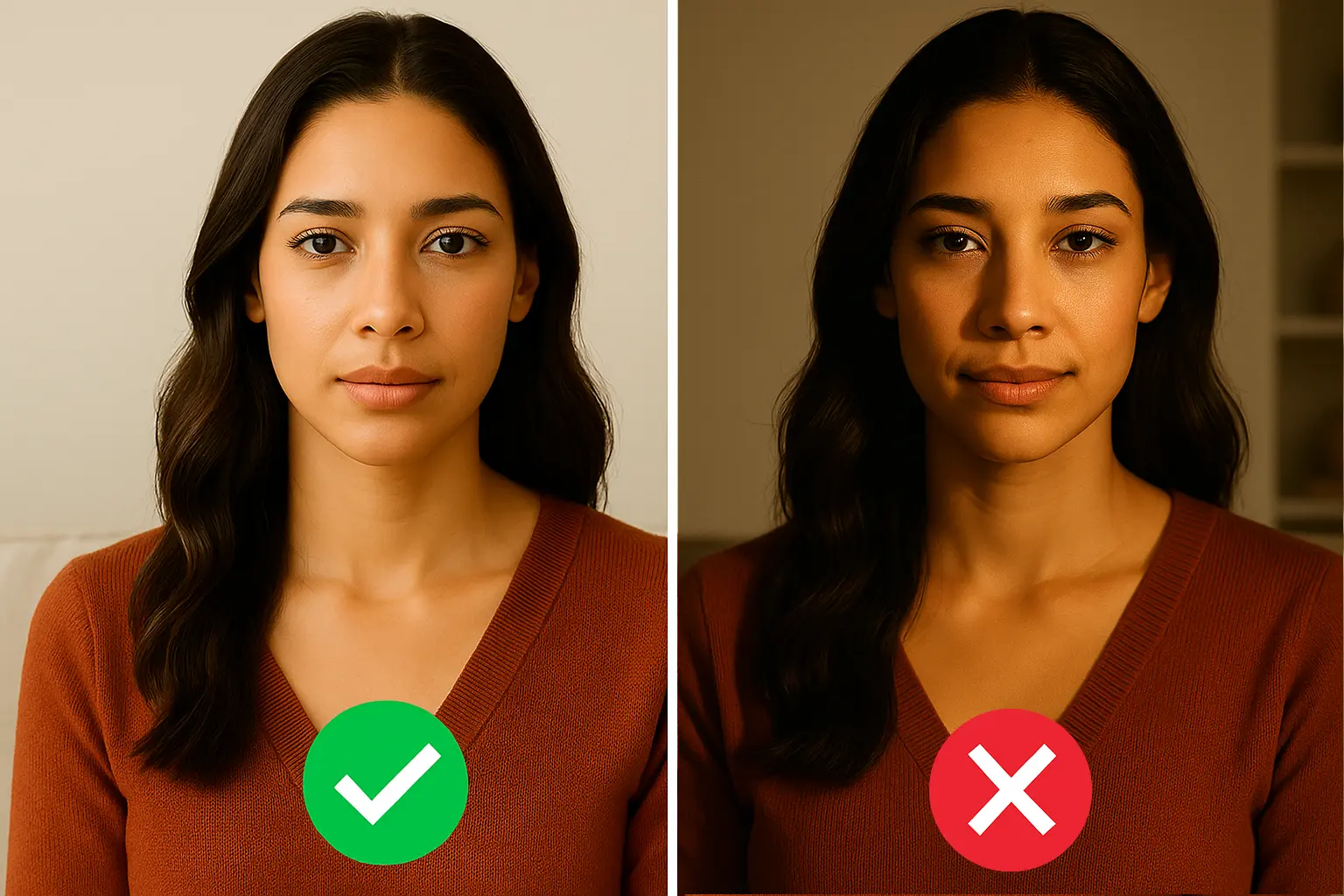
Lighting on both sides of the face
Use natural lighting for even illumination. Avoid shadows and ensure all facial features are clearly visible.
Ready in under 5 minutes • Works with any smartphone
Print Your Vietnam e-Visa PhotoSame Day
Walgreens, CVS & Walmart • Under $1 for 4 Photos
How to Print Your Photo
Download your digital photo
After checkout, download the print-ready file to your phone or computer
Visit CVS, Walgreens, or Walmart photo center
Use their app or in-store kiosk to upload your photo
Print as 4x6 photo
Your file includes 4 passport-size photos on one 4x6 print
Print ready in 1 hour • No appointment needed
Vietnamese E-Visa SpecificationsMade Simple
Official Requirements • Compliant Standards
Size
Resolution
Position
Background Color
Not Permitted
The Complete Guide to Vietnam e-Visa Photo Requirements (2026)
Applying for a Vietnam e-Visa through the official evisa.xuatnhapcanh.gov.vn portal? The photo upload is the single most common reason applications get stuck or rejected. Vietnam uses a non-square 4 × 6 cm (40 × 60 mm) specification that trips up applicants used to the US 2 × 2 inch format. This guide covers every specification, the portal upload rules, and the exact fixes for the rejections US citizens see most often.
The Quick 2026 Compliance Checklist
| Do ✅ | Don't ❌ |
|---|---|
| Use a plain white background | Wear eyeglasses of any kind |
| Face the camera directly, neutral expression | Submit blurry, low-resolution, or pixelated photos |
| Keep the full head from chin to crown visible | Smile or show teeth |
| Take the photo within the last 6 months | Wear hats or non-religious head coverings |
| Upload a JPEG file | Upload PNG, HEIC, or PDF (portal rejects instantly) |
| Keep the file under the portal size limit | Use beauty filters, AI enhancement, or retouching |
Vietnam e-Visa Photo Specifications
The Vietnam e-Visa system managed by the Vietnam Immigration Department (Bộ Công an — Xuất Nhập Cảnh) uses a standard 4 × 6 cm portrait specification. The same spec applies whether you apply directly on the e-Visa portal or through an authorized visa service.
| Specification | Value |
|---|---|
| Physical print size | 4 × 6 cm (40 × 60 mm) |
| Imperial equivalent | 1.57 in × 2.36 in |
| Pixel dimensions at 300 DPI | 472 × 709 pixels |
| Aspect ratio | 2:3 (portrait) |
| File format | JPEG (.jpg) |
| Background color | Plain white |
| Color mode | Full color (no black & white) |
| Head height | Approx. 66% of frame (chin to crown) |
| Recency | Taken within the last 6 months |
Important: Vietnam's 4 × 6 cm portrait aspect ratio is not the same as the US 2 × 2 inch square or the 35 × 45 mm Schengen/China format. A photo prepared for a US passport, Chinese visa, or Schengen visa will be rejected by the Vietnam e-Visa portal without cropping.
Step-by-Step: Uploading Your Photo to evisa.xuatnhapcanh.gov.vn
The official Vietnam e-Visa portal has a specific upload flow that rejects non-conforming files immediately. Follow these steps to avoid wasted submissions.
- Prepare the file in advance. The portal does not provide a cropping or editing tool. Your JPEG must already be the correct dimensions and file type before you upload.
- Navigate to the e-Visa application form. On the portal, select For foreigners — E-Visa Issuance.
- Upload your passport data page image. This is a separate upload from the face photo — do not confuse them.
- Upload the face photo. The upload field is labeled Portrait photo (or the Vietnamese equivalent). Click Choose file and select your prepared 4 × 6 cm JPEG.
- Wait for the preview. If the portal accepts the file, you will see a preview of your photo inside the form. If the file is rejected (wrong format, too large, or dimensions out of range) you will see a red error message — the portal does not tell you which specific rule failed, so double-check everything.
- Submit the application and pay the fee. The $25 single-entry or $50 multiple-entry fee is non-refundable, so confirm your photo and passport data are correct before paying.
- Check the processing window. Standard e-Visa processing takes 3 working days. If your photo is rejected after submission, you will receive an email asking you to resubmit — your fee is not refunded and you cannot change the photo without reapplying.
The 10 Most Common Vietnam e-Visa Photo Rejection Reasons
Based on Vietnam Immigration Department guidance and reports from US citizen applicants, these are the issues that trigger the majority of rejections.
- Wrong aspect ratio. Applicants upload a 2 × 2 inch square photo or a 35 × 45 mm photo. The portal requires 4 × 6 cm (2:3 portrait) — anything else is rejected.
- Background not uniformly white. Cream, off-white, light grey, and blue backgrounds fail. Shadows on a white wall count as a non-white background.
- Face too small in the frame. Your head should fill roughly two-thirds of the photo height. Selfies taken at arm's length leave too much background.
- Wearing glasses. As of the 2024 update, eyeglasses are not permitted even without glare. Remove all glasses before the photo.
- Smiling or showing teeth. Vietnam uses the ICAO neutral-expression standard. Mouth closed, no smile.
- Head tilt or off-center. The head must be straight and centered. Even a 5° tilt is flagged by automated validation at some entry checkpoints.
- File format not JPEG. HEIC files from iPhones and PNG files from screenshots are rejected instantly. Convert to JPEG before uploading.
- File size too large. Very high-resolution phone photos can exceed the portal limit. Compress the JPEG without dropping resolution below 472 × 709.
- Digital alterations. Beauty filters, AI enhancement, and background replacement from non-compliant tools are flagged. Use a purpose-built compliance tool instead.
- Photo older than 6 months. The photo must reflect your current appearance. Significant changes in hairstyle, facial hair, or weight since the photo was taken are grounds for rejection at the border, even after the e-Visa is approved.
Vietnam e-Visa vs. Vietnam Visa on Arrival (VOA) vs. Embassy Visa
Not all Vietnam visa types use the same photo. Make sure you are preparing the right one.
| Application Type | Photo Format | Where Used |
|---|---|---|
| e-Visa (online) | 4 × 6 cm, digital JPEG upload | evisa.xuatnhapcanh.gov.vn |
| Visa on Arrival (VOA) | 2 × 2 printed photos (2 copies) + approval letter | Collected at airport on arrival |
| Embassy / Consulate visa | 2 × 2 printed photos (2 copies) | In-person at Vietnamese embassy |
US citizens applying online for tourism, business, or transit should use the e-Visa (4 × 6 cm digital). The 2 × 2 inch format is only used if you take the visa-on-arrival or embassy route.
Tips for US Citizens
- Take the photo in daylight. Stand about 4 feet from a plain white wall, facing a large window. Two soft light sources at 45° work even better.
- Dark clothing. Wear a dark top so your shoulders do not blend into the white background.
- Use your phone — carefully. Selfie cameras introduce barrel distortion. Have someone else take the photo with the rear camera from 4 feet away, or use a tripod.
- Do not use the retail-store photo. CVS and Walgreens offer US passport photos (2 × 2 inch) and will not prepare a Vietnam-sized 4 × 6 cm portrait. If you ask them to resize, the background and head position will be wrong.
- Test the upload before you pay. The portal lets you reach the photo upload step before payment. Use that window to confirm your file is accepted — do not pay the fee until the preview renders.
Get Your Vietnam e-Visa Photo in 60 Seconds
Vietnam's 4 × 6 cm portrait spec is one of the trickiest to get right manually — the aspect ratio, head positioning, and background rules all have to be exact. Instead of guessing, let our AI-powered tool handle it.
Upload any photo from your phone and Snap2Pass will automatically:
- Crop and resize to the exact 4 × 6 cm (472 × 709 px) Vietnam e-Visa specification
- Replace the background with a compliant plain white
- Verify the head height is in the 66% target range
- Detect glasses, tilt, smile, and shadow issues
- Deliver a ready-to-upload JPEG under the portal size limit
- Provide unlimited free resubmissions within 14 days
With a 99.8% acceptance rate across 500,000+ users, Snap2Pass takes the guesswork out of the Vietnam e-Visa photo upload — and if your photo is ever rejected, we retake it for free.
Frequently Asked Questions
What size is a Vietnam e-Visa photo?
The Vietnam e-Visa photo must be 4 × 6 cm (40 × 60 mm), which is 1.57 × 2.36 inches or approximately 472 × 709 pixels at 300 DPI. The aspect ratio is 2:3 portrait — not the square format used by US passport or Chinese visa photos.
Can I use my US passport photo for a Vietnam e-Visa?
No. US passport photos are 2 × 2 inches square, while Vietnam e-Visa photos are 4 × 6 cm portrait (2:3 aspect ratio). A 2 × 2 inch photo will be rejected by the e-Visa portal. You need to either retake the photo or use a tool like Snap2Pass that crops and resizes to the Vietnam specification.
What file format does the Vietnam e-Visa portal accept?
The Vietnam e-Visa portal accepts JPEG (.jpg) files only. PNG, HEIC (iPhone default), PDF, and BMP files are rejected at upload. If your photo is in HEIC format, convert it to JPEG before uploading.
What happens if my Vietnam e-Visa photo is rejected?
If your photo fails the portal's automated checks at upload, you can select a new file before submitting. If it passes upload but fails manual review after submission, you will receive an email from the Vietnam Immigration Department asking you to reapply — your $25 or $50 fee is not refunded, so it is worth getting the photo right the first time.
Can I wear glasses in my Vietnam e-Visa photo?
No. As of the 2024 update to Vietnam's photo standards, eyeglasses are not permitted in e-Visa photos, even without glare. Remove all prescription, reading, and sunglass frames before taking the photo. Medical exemptions require a signed note from a doctor.
Do I need to print the Vietnam e-Visa photo?
No — the e-Visa application is fully digital. You only need to upload the JPEG file. Printed photos are only required for Visa on Arrival (VOA) or in-person embassy applications, which use a different 2 × 2 inch format.
How recent does my Vietnam e-Visa photo need to be?
The photo must have been taken within the last 6 months and reflect your current appearance. Significant changes in hairstyle, facial hair, weight, or age since the photo was taken are grounds for rejection at the Vietnam border even after the e-Visa is approved.
Sources
- Vietnam Immigration Department e-Visa portal:
https://evisa.xuatnhapcanh.gov.vn - Vietnam Ministry of Public Security photo specifications (2024 update)
- Reports from US citizen e-Visa applicants (VisaJourney, Reddit r/VietNam)
Common QuestionsAnswered
Everything You Need to Know
Supported DocumentsWorldwide
All Countries • Current 2025 Regulations • ICAO Compliant